
WILD

Heart of the global wilderness conservation movement.

  • Home
  • Our Vision
    • About
    • History
    • Nature Needs Half
  • How we work
    • Action
    • Publishing & Arts
    • Convening
    • Policy & Management
    • Intergenerational
    • Training & Capacity Building
  • Where we work
    • Wild Africa
    • Wild Asia
    • WILD Europe
    • Wild Latin America
    • Mind & Heart
    • Wild North America
  • World Wilderness Congress
    • History
    • Accomplishments
    • WWC Chronicles
    • WWC Publication Archive
  • WILD Interactive
    • Blog
    • E-leaf Newsletter
    • Forum
    • Multimedia
  • Support WILD
    • Donate
    • Finances & Effectiveness
    • Creative Ways to Give
    • Legacy Giving
    • Publications & Gear Store
    • Contact Us
  • DONATE NOW
Subscribe

by RSS by Email


Connect with WILD

Facebook MySpace YouTube Twitter


Join Email List
For Email Marketing you can trust

Back to WILD Blog

About

Learn More about our Blog, and who’s behind it.

Categories
  • Books, Magazines & Other Publications
  • Climate Change
  • Communications & Media
  • Field Notes
  • Ian Player Perspectives
  • Intergenerational Blog
  • Mali Elephant Blog
  • Native People & Traditional Cultures
  • Nomkhubulwane Blog
  • PhotoBlogs
  • Policy & Politics
  • Wilderness Designations
  • Wilderness Experience
  • Wildlife
  • WWC

Mali Elephants Featured in Pachyderm Magazine – Community Outreach in Full Swing

July 13,2009 by Emily Loose

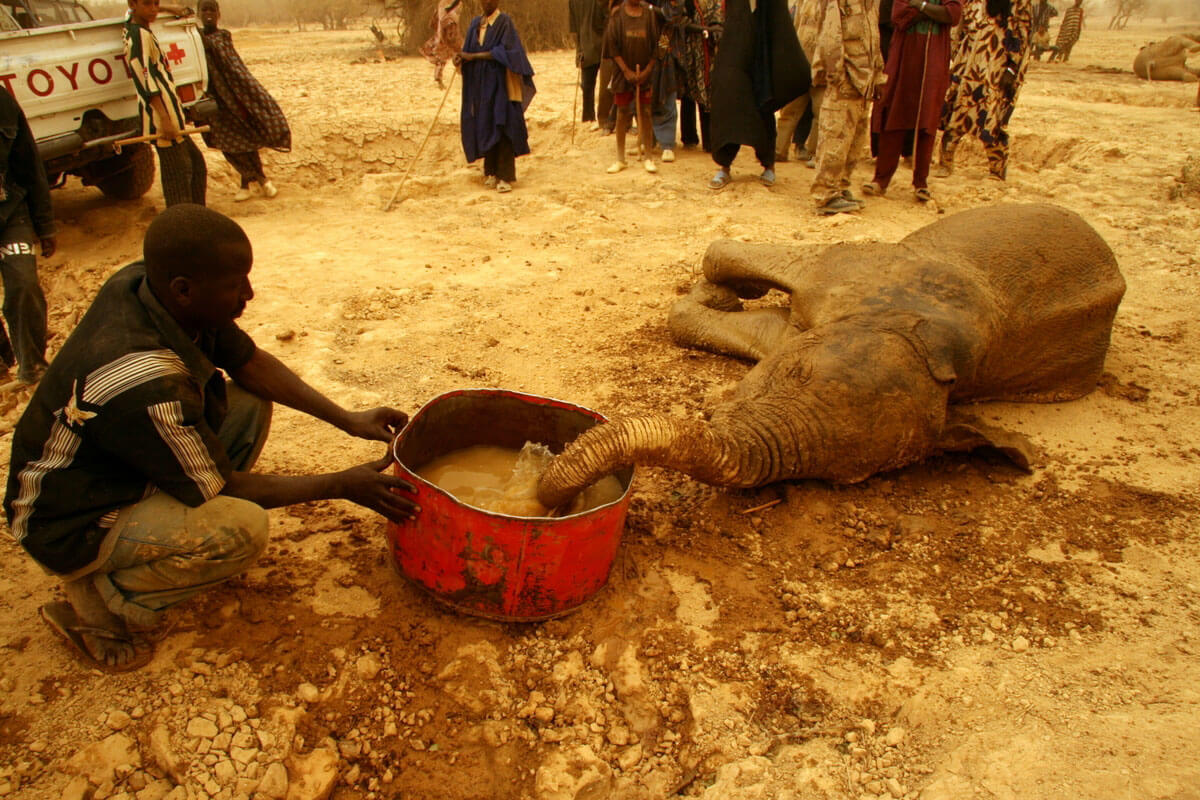
Baby elephant suffers from water shortage, Mali 2008. Photo by Jake Wall

As reported in several previous blogs, the recent drought in Mali threatened the unique Mali elephant herd.  The issues of water, access to water and human-elephant conflicts are however not new to the Gourma region.  Recently, partners from Save the Elephants (Iain Douglas-Hamilton and Jake Wall) published a paper in Pachyderm Magazine, summarizing the issues and outlining our collaborative work (STE, WILD, Malian Government and others) to protect the elephants.

Project leader for our Mali Elephant Project, Susan Canney, was just in Mali for two weeks to assess next steps for the project, and continue the very important collaborative work with the Mali Directorate pour la Conservation de la Nature (DNCN) and STE.  She reports that rains are light, but finally falling, and the elephants are out of immediate danger.  With thanks to the generous donors and the urgent action response of DNCN, WILD and STE, the elephants survived one of the worst droughts in over 26 years.
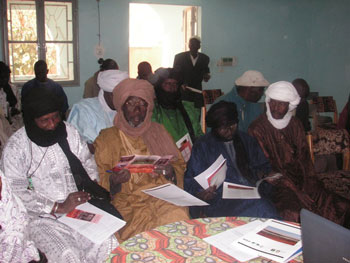
During her time in Mali, Dr. Canney focused on long term strategies and on community involvement and local outreach.  Forming a new partnership with Association Malienne de la Conservation de la Faune et de l’Environment (AMFCE), a local NGO was a critical outcome of her trip.  This partnship will further one of our major capacity building objectives, and assist with our growing outreach and awareness efforts — including awareness materials in 5 local languages.  She also set the ground work for a potential long term management and land use plan with more collaboration from the Malian government and the African Parks Foundation.  Stay tuned for more updates!

  • email
  • Print
  • Digg
  • Facebook
  • del.icio.us
  • Reddit
  • StumbleUpon
  • Twitter
Share:
  • email
  • Print
  • Digg
  • Facebook
  • del.icio.us
  • Reddit
  • StumbleUpon
  • Twitter
Posted in: Field Notes, Talking WILD
Comments: 1 (Post Comment)

The Desert Elephants of Mali - The WILD Foundation commented:

July 14th, 2009 at 12:34 pm

[...] Read the Latest News About Mali’s Elephants [...]

Post your Comment here


Comments are the sole responsibility of their authors. WILD is not responsible, nor will be held liable, for blog comments. WILD reserves the right to delete any comment that is abusive, profane, rude, or considered spam.


Copyright Disclaimer Privacy Statement Bylaws & Articles of Incorporation Terms of Use Contact Us Site Map

We give special thanks to the numerous professional and amateur photographers, many of them from the International League of Conservation Photographers, who generously donate the use of their images. © 2003 – 2012 The WILD Foundation