
WILD

Heart of the global wilderness conservation movement.

  • Home
  • Our Vision
    • About
    • History
    • Nature Needs Half
  • How we work
    • Action
    • Publishing & Arts
    • Convening
    • Policy & Management
    • Intergenerational
    • Training & Capacity Building
  • Where we work
    • Wild Africa
    • Wild Asia
    • WILD Europe
    • Wild Latin America
    • Mind & Heart
    • Wild North America
  • World Wilderness Congress
    • History
    • Accomplishments
    • WWC Chronicles
    • WWC Publication Archive
  • WILD Interactive
    • Blog
    • E-leaf Newsletter
    • Forum
    • Multimedia
  • Support WILD
    • Donate
    • Finances & Effectiveness
    • Creative Ways to Give
    • Legacy Giving
    • Publications & Gear Store
    • Contact Us
  • DONATE NOW
Subscribe

by RSS by Email


Connect with WILD

Facebook MySpace YouTube Twitter


Join Email List
For Email Marketing you can trust

Back to WILD Blog

About

Learn More about our Blog, and who’s behind it.

Categories
  • Books, Magazines & Other Publications
  • Climate Change
  • Communications & Media
  • Field Notes
  • Ian Player Perspectives
  • Intergenerational Blog
  • Mali Elephant Blog
  • Native People & Traditional Cultures
  • Nomkhubulwane Blog
  • PhotoBlogs
  • Policy & Politics
  • Wilderness Designations
  • Wilderness Experience
  • Wildlife
  • WWC

Update on the Elephants of Pafuri

January 4,2010 by Emily Loose

As mentioned in previous posts, WILD is involved with a project to track elephant movements in Pafuri (a region of Kruger National Park) lead by Wilderness Safari Wildlife Trust.  We received an update on the collaring project, which tracks the elephant’s movements in order to inform conservation decisions. 

With the arrival of the summer rains, the elephants are much more active, and their movements are much more varied.  Some of the bull (male) elephants have traveled great distances, into Mozambique and along the Limpopo corridor.  The cows (females) travel less dramatic distances, but all travel generaly south, following the summer rains.  The two “newest,” most recently collared cows provided intresting data, as the movements differ from the others, who tend to cluster in the eastern region.
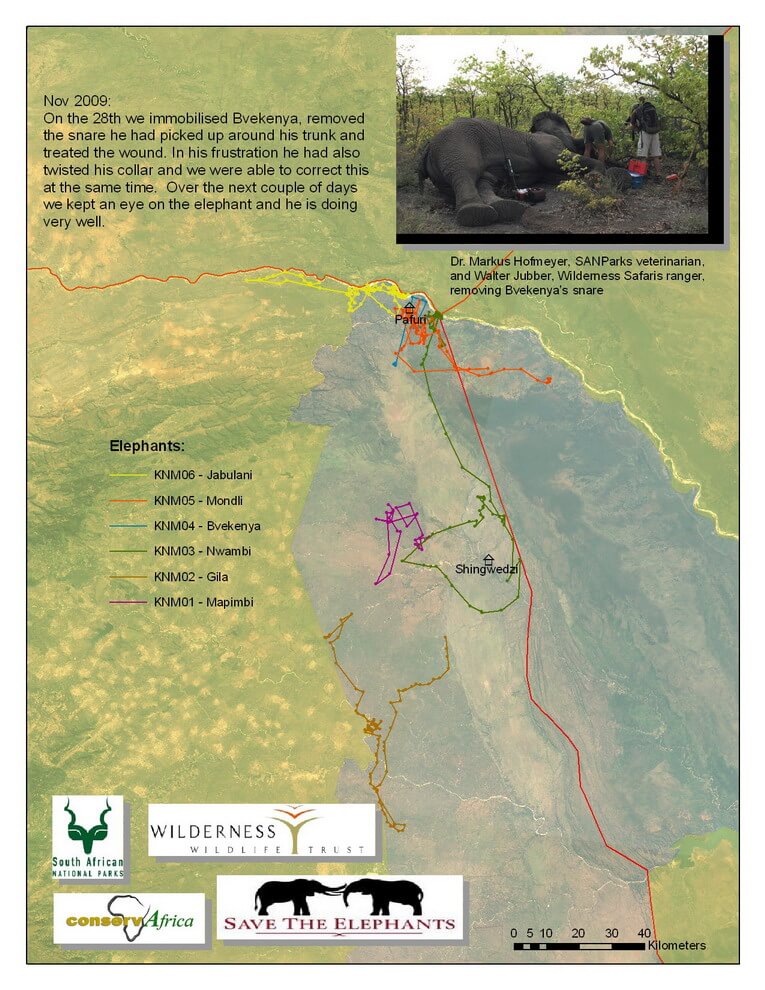
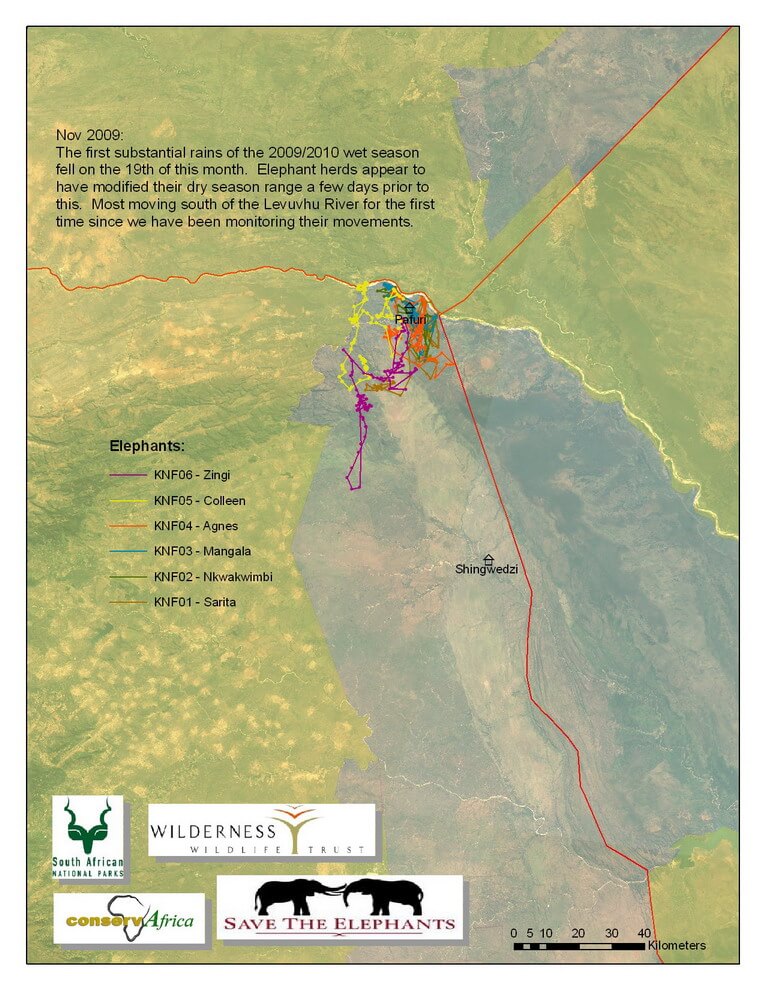
See a map of the bulls' movements

KNP_cows_2009_11

  • email
  • Print
  • Digg
  • Facebook
  • del.icio.us
  • Reddit
  • StumbleUpon
  • Twitter
Share:
  • email
  • Print
  • Digg
  • Facebook
  • del.icio.us
  • Reddit
  • StumbleUpon
  • Twitter
Posted in: Field Notes, Talking WILD, Wildlife
Comments: 0 (Post Comment)

Post your Comment here


Comments are the sole responsibility of their authors. WILD is not responsible, nor will be held liable, for blog comments. WILD reserves the right to delete any comment that is abusive, profane, rude, or considered spam.


Copyright Disclaimer Privacy Statement Bylaws & Articles of Incorporation Terms of Use Contact Us Site Map

We give special thanks to the numerous professional and amateur photographers, many of them from the International League of Conservation Photographers, who generously donate the use of their images. © 2003 – 2012 The WILD Foundation