WILD

View our 4-Star Charity Navigator Rating
  • Home
  • About
  • World Wilderness Congress
    • Accomplishments
    • WILD9
  • Field Projects
  • Policy & Research
  • Communications
  • Community
    • WILD Blog
    • WILDyouth
    • WILD Forum
    • WILD Calendar
    • WILD Media
  • Support
    • Donate
    • WILD Store
    • Get Involved

    DONATE NOW

Subscribe

by RSS by Email


About

Learn More about our Blog, and who’s behind it.

WILD Commentary

For more in-depth discussion of conservation and policy.

Connect with WILD

Facebook MySpace YouTube Twitter

Categories
  • Books, Magazines & Other Publications
  • Climate Change
  • Communications & Media
  • Field Notes
  • Ian Player Perspectives
  • Mali Elephants
  • Native People & Traditional Cultures
  • Nomkhubulwane
  • Policy & Politics
  • Wilderness Designations
  • Wilderness Experience
  • Wildlife
  • WILDyouth Blog
  • WWC
Check Out These Blogs
  • iLCP
  • The Nature Files
  • Tierra Silvestre
  • Wild Wonders of Europe
  • Wilderness Foundation (UK)
Archives

iLCP Team in Great Bear Rainforest to document biodiversity and marine life

September 2,2010 by Emily Loose

The International League of Conservation Photographers (iLCP) has rounded up another stellar RAVE (Rapid Assessment Visual Expedition) crew and teamed up with Pacific WILD to expose BC’s plans to lift the moratorium on tanker traffic along BC’s coast and how that could very easily lead to a repeat of the Exxon Valdez in the Great Bear Rainforest. Read More

How Wild Nature Provides Seed Diversity

August 16,2010 by GuestBlogger

As the world's population exponentially explodes, demand for additional living space and resources for survival greatly increase. To supply this demand, we compromise the integrity and survival of the natural world and existing ecosystems around us. As a result, the earth and wild nature bears the weight and suffers the most damage in order to make way for its human counterparts. Tropical rainforests are demolished, natural plant and animal ecosystems are threatened, and the quality of the atmosphere steadily depreciates. And as we continue to degrade the health of the world around us, we come dangerously ... Read More

Protests growing against coal mine damage to World Heritage Site in South Africa

August 13,2010 by Vance Martin

News reports today verify that public, governmental, and financial markets are beginning to react against Coal of Africa’s mining operations that are damaging the Maqpungubwe National Park and World Heritage area. As we mentioned yesterday on TalkingWILD, the damage from this existing, open-cast, coal strip-mine is already mounting, has been called ‘irreversible”, yet the company’s application to expand operations has been approved by provincial government. However, iafrica online today reported that the company CoAL is under pressure from South Africa’s national government through their “Green Scorpions” (environmental investigations force). In addition, since the legal interdict was filed by our colleagues in ... Read More

World Heritage Site Threatened by Coal Mine

August 12,2010 by Vance Martin

A priceless World Heritage Site in South Africa is highly endangered by an open-cast, coal, strip-mine operating recklessly right on its boundary – and that is now set to expand! Mapungubwe National Park – a World Heritage Site and critically important transfrontier conservation area straddling South Africa, Zimbabwe, and Botswana -- honors and protects the wild, natural area that is the site of “one of the most complex kingdoms that ever existed in Africa”, some 1000 years ago. Read More

Elephant Death Rites

August 4,2010 by SusanCanney

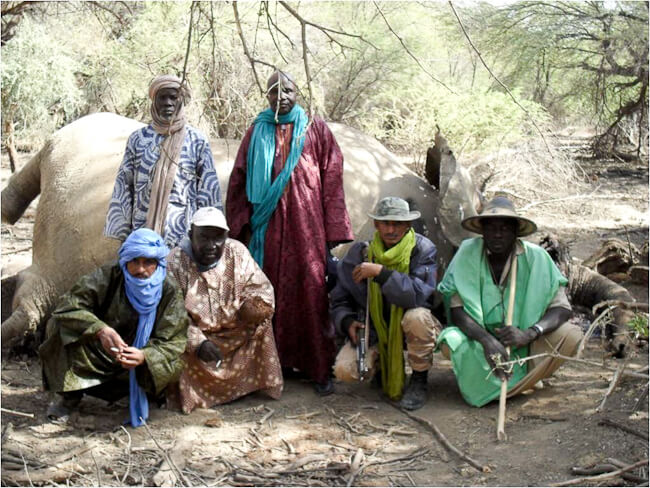
One of those small happenings where the elephant and the human worlds meet ….. Villagers from Wami told me about an elephant that had died nearby from natural causes (old age or disease). A group of about 6-8 elephants remained, standing around and apparently watching over the dead body which they covered with earth and branches. They stayed for around 4 days before moving on and leaving just one elephant who stayed for another 3 or 4 days before she left too. Read More

iLCP on the Chesapeake Bay

July 29,2010 by Emily Loose
This week, iLCP photographers take to the Bay (the Chesapeake Bay that is) to highlight the importance of the Bay and the entire Chesapeake Bay watershed.   Seven iLCP photographers and two guest photographers, many of whom have a special relationship with or live in the Chesapeake Bay watershed, are gathering video footage, photographs and compelling stories.  In partnership with the Chesapeake Bay Foundation, these photographers and iLCP staff will produce an action exhibit of thirty photographs to premiere in September 2010 on Capitol Hill and provide the compelling visual media necessary to facilitate news coverage of the urgency of the ... Read More

Other side of the globe — Same issue

July 7,2010 by Emily Loose

Right now, there is great focus and concern on the Gulf coast - and rightly so.  The impacts of the Gulf oil spill on the ecological systems and human communities are tragic and likely not yet fully realized.  Recovery from this disaster will be a long, slow process.  Tragically, a similar, albeit less grandiose in scale, oil spill has impacted the Orissa coast of India, one of the last remaining nesting grounds for the endangered Olive Ridley Sea Turtles. Read More

5 Conservation Tips Every Backpacker Should Know

July 6,2010 by Louise Baker

Most backpackers have a deep respect and appreciation for nature. Not all backpackers understand that it is important to demonstrate this respect by backpacking in a manner that ensures the land used is not harmed or damaged in anyway. If all backpackers follow some basic conservation practices, we can preserve these beautiful lands for future generations. 1. Leave No Trace This is the golden rule of responsible backpacking. There should be no sign that you and your group passed through. You should tread as lightly as possible on your hikes. Do not cut down trees to use as firewood. In fact, many ... Read More

The World’s Rarest Trees

July 2,2010 by Emily Loose

As I was blissfully looking out my window (trying to think of a compelling blog topic) I noticed a few beautiful trees.  It's a gorgeous sunny summer day in Boulder and with the fair amount of rain we've gotten so far this summer, things are reasonable green still!  I started to wonder about what the rarest tree in the world is....here's what I came up with from a little internet searching: Pennantia baylisiana There is apparently only 1 tree in the wild, located on one of the Three Kinds Islands, off the coast of New Zealand.  It is listed in the Guinness ... Read More

The Rain has arrived in Mali!

June 18,2010 by SusanCanney

We are breathing a sigh of relief as it has been raining since the beginning of June and so far the rains are good! This year was very tough for the elephants. Usually they rely on the lake of Banzena for water at this time of year, but this year it was crowded with huge numbers of cattle and reduced to a muddy puddle. The cattle returned to the river Niger where water is plentiful, but the journey was too far for the elephants who needed water quickly and they cannot use water from the wells along ... Read More
Page 1 of 1312345»...Last »


Copyright |Disclaimer |Privacy Statement |Bylaws & Articles of Incorporation |Terms of Use |Contact Us

We give special thanks to the numerous professional and amateur photographers, many of them from the International League of Conservation Photographers, who generously donate the use of their images. © 2003 – 2009 The WILD Foundation